Zijins Lithiummine im Kongo soll zu den größten der Welt gehören
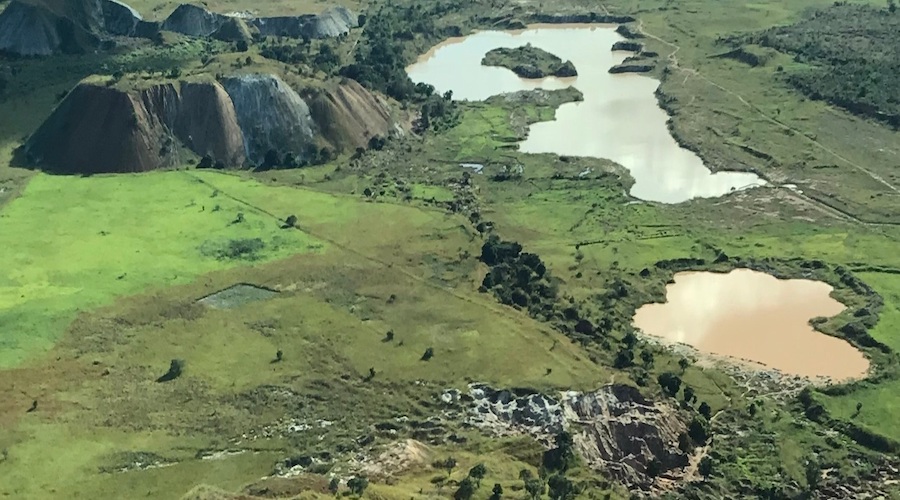
The lithium mine Zijin Mining Group Co. plans to open this year in the Democratic Republic of Congo is set to be one of the world’s biggest suppliers of the battery metal.

The Chinese company – which has grown at breakneck speed to become a top producer of copper and gold – has been developing the Manono lithium project in southeastern Congo since it secured the prized deposit in 2023.
The mine, which Zijin aims to commission this June, will be able to supply 130,000 tons of lithium carbonate equivalent a year once it reaches full capacity, according to a report the company released on March 20.
That “would put Manono in the highest echelons” of hard-rock lithium assets, with only a couple of giant mines in Australia having the capacity to produce more, said Martin Jackson, head of battery materials markets at consultancy CRU Group.
While the report didn’t specify how long it will take for the mine to hit full capacity, it will be a significant contributor to global production of the metal used in electric vehicles and energy storage systems. At full tilt in 2028, Zijin’s new operation would account for 5% of mined lithium supply, according to Jackson.
The Manono project has a complicated history because another company, Australia’s AVZ Minerals Ltd., still claims the rights to the area Zijin will soon start mining. Congo revoked AVZ’s license three years ago – after the Perth-based firm had found Manono to contain one of the largest hard-rock lithium deposits in the world – before awarding the northern portion of the concession to the Chinese miner.
AVZ has initiated arbitration proceedings against the Congolese state as part of efforts to recover the entire permit. The southern section of Manono has also caught the attention of KoBold Metals Co. – an AI-driven exploration startup whose backers include billionaires Bill Gates and Marc Andreessen – as American investors try to capitalize on a US-Congo minerals partnership signed in December.
During a meeting at the White House earlier this year, Trump administration officials urged an AVZ executive to sell his firm’s interest in Manono to a US company, which could then develop a second mine, Bloomberg reported.
Zijin’s mine – which the report said is costing $1.4 billion to build – will likely produce between 850,000 and 875,000 tons of lithium concentrate a year at full capacity, according to Jackson and Chris Williams, an analyst at industry consultancy Adamas Intelligence. Lithium concentrate is a semi-processed material that is refined into higher-value battery-grade compounds.
A smelter that the company intends to finish by the end of the year will process about 500,000 tons of concentrate a year into an intermediate lithium sulfate product, according to its own report.
Das chinesische Unternehmen besitzt fast 55 % des Manono-Projekts, die restlichen Anteile hält der kongolesische Staat. Zijin ist außerdem an zwei Kupferminen in dem zentralafrikanischen Land beteiligt, darunter mit 39,6 % am riesigen Kamoa-Kakula-Komplex.
Eine aggressive Akquisitionsstrategie hat Zijin zudem zu einem der fünf größten Goldproduzenten gemacht, mit Minen, die sich über China, Zentralasien, Afrika, Australasien und Südamerika erstrecken.
Afrika – allen voran Simbabwe – hat sich rasant zu einem wichtigen Lithiumlieferanten für Chinas dominierende Batterieindustrie entwickelt. Laut Williams von Adamas Intelligence würde die Goulamina-Mine der Ganfeng Lithium Group Co. in Mali nach Abschluss eines Erweiterungsprojekts sogar die kongolesische Mine von Zijin übertreffen.
Kurzfristig gesehen bedeutet das kürzlich von Simbabwe verhängte Exportverbot für Lithiumkonzentrat jedoch, dass Manonos bevorstehender Produktionsbeginn „für den Markt zu einem sehr ungünstigen Zeitpunkt erfolgt“, sagte Jackson von CRU.
Zitiert von mining.com